Presenting Condition and Veterinary Diagnosis
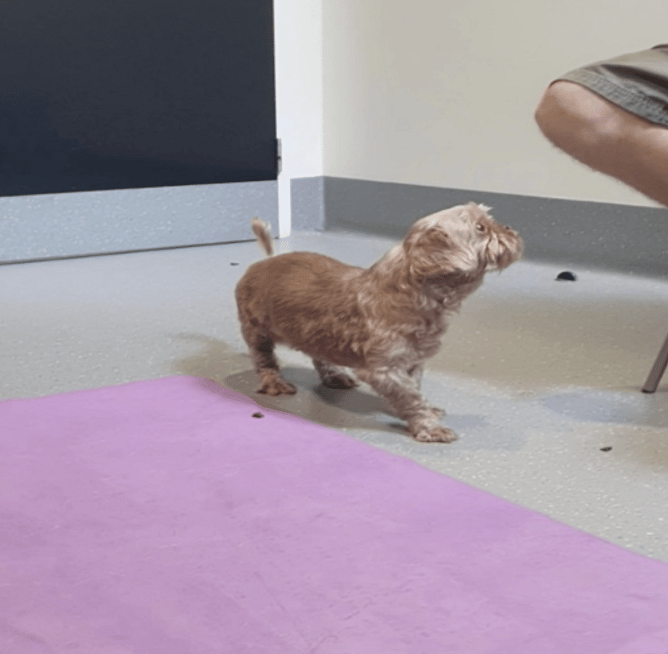
Meet Cocoa. She is an adorable 11 year 7- month-old chocolate Shih Tzu who came to see the specialist team at Queensland Veterinary Specialists in November 2021 after she developed progressive loss of walking and ability to use all four limbs. Cocoa underwent a spinal CT myelogram and was diagnosed with intervertebral disc disease, affecting the cervical spine at C6 – C7 and compressing the spinal cord. Cocoa was taken to surgery where a ventral slot procedure was performed to remove the extruded disc material and allow the spinal cord to return to its normal position within the spinal canal.
Physiotherapy Assessment
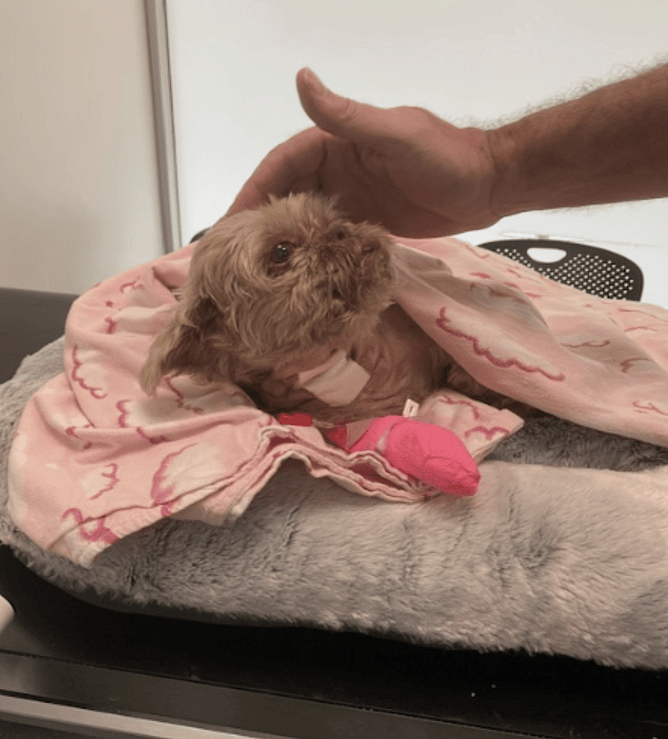
Physiotherapy assessment began as soon as Cocoa was medically well enough to participate. On initial assessment Cocoa was found to have reduced movement in her neck, and also her hips (due to longstanding osteoarthritis). Cocoa had altered muscle tone, causing low tone (weakness) in the neck and forelimbs and high tone (spasticity) in her hindlimbs. This meant Cocoa was unable to move her body, change positions, sit up or stand. The change is muscle tone was also a source of discomfort for Cocoa.
Treatment Provided
Physiotherapy initially involved passive range of motion to maintain movement in the forelimb and hindlimbs joints. Physiotherapy exercises focused on functional movements patterns such as lifting the head, half-sitting and rolling from one side to side, retraining Cocoa to be able to change body positions independently.
Cocoa was supported in standing and positioned optimally so she could develop strength in her neck muscles and engage with the world – these are all necessary foundational steps from which to start walking. Cocoa was fortune to have a great nursing team at Queensland Veterinary Specialists who were able to complete her exercises four times daily under the direction of the physiotherapist.
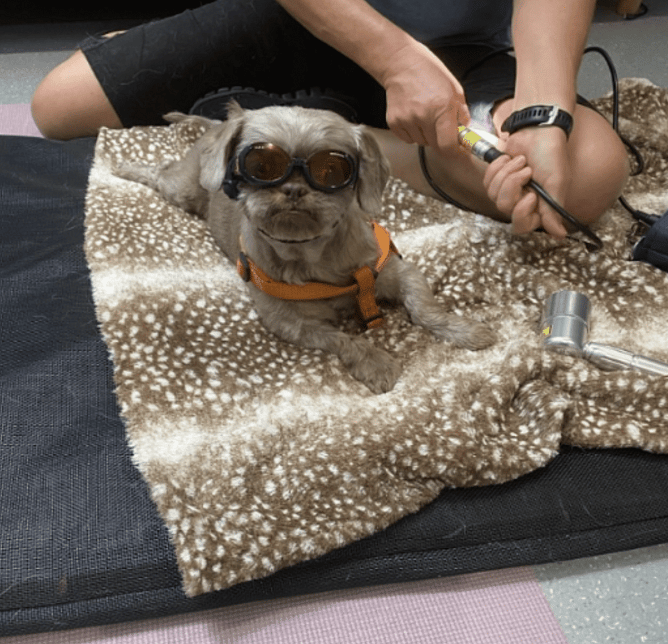
Cocoa received low level laser therapy for stimulating wound healing (see photo below). The light immitted from the laser increases blood flow, assists vital cellular functions, and encourages the growth of healthy new tissue.
Cocoa needed some encouragement with her walking, so we chose to utilize the underwater treadmill for facilitating this, as well as unloading any painful joints affected by her known osteoarthritis. In addition, walking in water provides resistance and this facilitates increases in muscle strength, allowing for strength and conditioning of the muscle groups specific to walking. We raised the water level to an appropriate height which allowed Cocoa to stand independently (supported by the bouyancy of the water), and by the end of the first session Cocoa was taking her first steps.
Outcome
At the time of writing this case study report, Cocoa was three months post-surgery. Cocoa is able to do most things independently, is now walking 100 metres, and is back to her happy, cheeky self! Cocoa continued to attend physiotherapy where the focus was on strength and endurance exercises for both the fore and hindlimb muscles to further refine and improve her movements and walking quality. Cocoa got her walking legs back, and has gone on to enjoy in latter years in strength and style!